Digital Marketing for Business Success: Proven Strategies to Grow Online
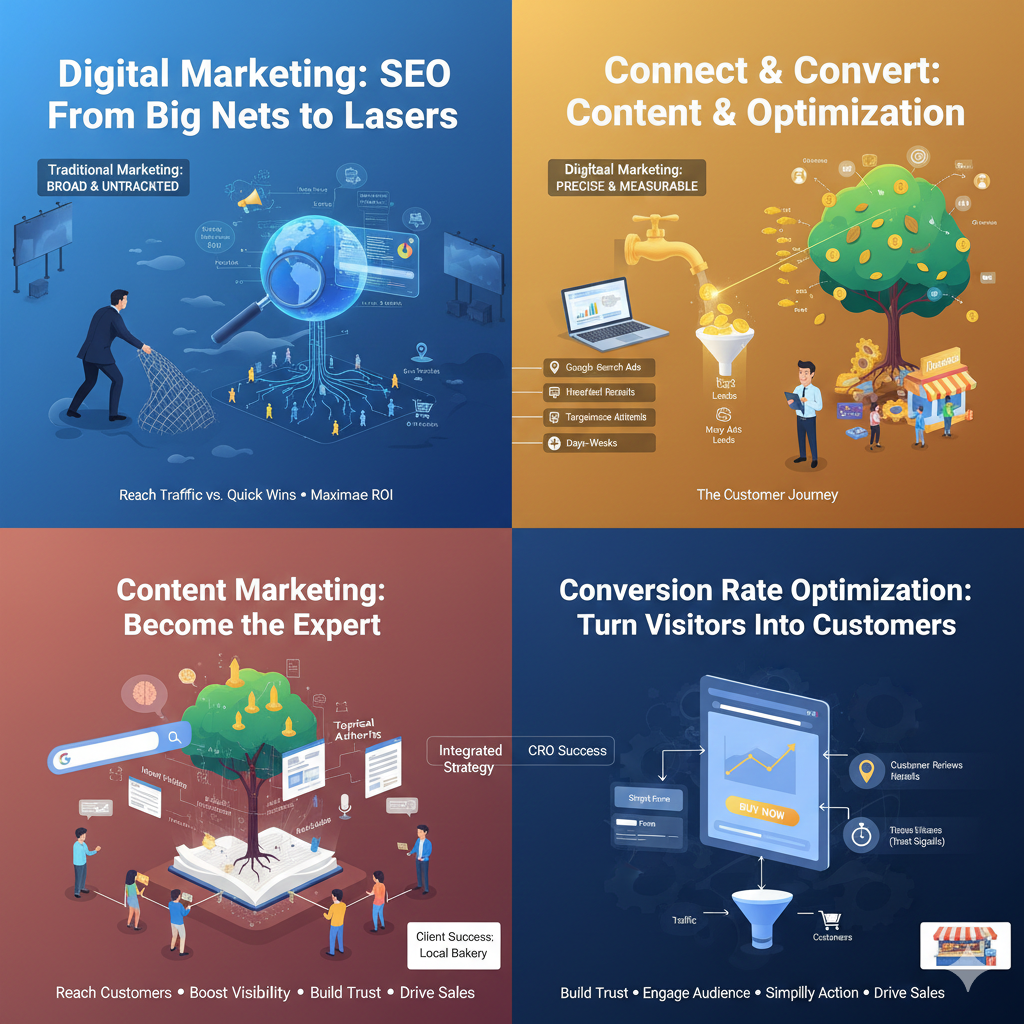
I’ve spent six years working in digital marketing. During that time, I’ve watched small local shops grow into well-known names and big international brands double their sales—all because of digital marketing. Today, it’s not just a bonus; it’s essential for your business to survive and grow. In this guide, I’ll explain why digital marketing is important and share strategies to help your business grow. I’ll keep things straightforward, honest, and focused on what really works. Here’s what you can expect to learn: The key reasons digital marketing is essential for business growth How to reach the right customers and make every penny count Steps to boost your visibility with SEO How to use paid ads for quick results Ways to use content marketing to build trust and expertise Simple techniques to turn website visitors into customers Let’s dive in and break down these steps so you can put them into action right away. 1. Why Digital Marketing Is the Most Important Thing for Your Business When I started in digital marketing, I often heard people ask, “Aren’t big billboards better than all this online stuff?” I understand—there’s something exciting about seeing your logo on a busy street. But here’s what I’ve learned: digital marketing isn’t just an updated version of old methods. It’s a completely new approach that gives small businesses a fair shot. Traditional marketing, like billboards, radio jingles, and magazine ads, is like throwing a big net into the ocean, hoping to catch the right fish. Most of the time, you don’t even know if your target audience sees your message. You just spend money and hope for the best. Digital marketing changes this completely. It lets you: Precisely target your ideal customer based on interests, age, location, online behaviors, and even life events. Track every interaction, from the first website visit to the moment they make a purchase. Adjust your campaigns in real time. If something isn’t working, you can pause, tweak, and relaunch right away without waiting for the next print cycle. Scale up or down with your budget, focusing resources on what drives results. Here’s a story about a client—a small bakery that was almost empty on weekdays. We ran a few simple Facebook and Instagram ads targeting nearby people and promoted a weekday lunch special. I still remember the owner’s reaction when, just two months later, almost every table was full at lunch. The best part was that we could see exactly which ads worked and which didn’t, so every rupee spent really counted. That’s the power of digital marketing: you know what’s working and can make quick changes. 1.1 Digital Marketing: Finding Your Ideal Customers Traditional advertising is like firing a shotgun—you hope to hit something. Performance marketing is more like a laser, targeting people who just searched for specific terms on Google. When someone types “Hire Digital Marketing Consultant” or “Professional SEO Services,” they’re ready to buy. Digital marketing helps you be the answer they find. Let’s break it down: Search Engine Marketing (SEM) and Social Media Advertising let you target people with purchase intent. For example, Google Ads can show your business at the very top of results exactly when someone is ready to purchase. Behavioral targeting means you can show ads to people who have visited your website, interacted with your social media, or even watched a portion of your videos. This increases the chance of conversion because your message is always relevant. A real-world example: An e-commerce clothing brand I worked with used Google Shopping Ads to target buyers searching for “affordable party dresses.” We saw a 5x return on ad spend within 3 weeks by matching intent and timing perfectly. Counting Every Last Rupee One of the best parts of my job is working with data. In the past, if you placed an ad in a magazine, you couldn’t tell how many people bought because of it. But with Google Analytics 4, I can see exactly where customers came from, what they looked at, and why they bought or didn’t. So, we don’t guess—we know for sure. How do we use this? Every campaign is an experiment. We launch, measure, and learn. For example, if we run two ads—one with a discount offer, one with a free shipping offer—we know within days which one drives more sales. That means you spend less and earn more. Pro tip: Set up “Goals” in Google Analytics and connect it to your ad platforms. This lets you track every lead, sale, newsletter signup, or phone call. If you’re new to this, Google Analytics offers a step-by-step Goals setup wizard under the Admin section, and you can find beginner tutorials in the Google Analytics Help Center. This detailed tracking helps you improve over time. Leveling the Playing Field I’ve seen small businesses beat big companies by being better at targeted lead generation. You don’t need a million-dollar budget to win—you just need to be more useful and relevant to your audience than the big players. 2. The SEO Engine—How to Get Free Traffic for Years If you want your business to grow even while you sleep, you need to understand Search Engine Optimization (SEO). It’s a long-term strategy that pays off over time. Think of SEO as building a digital asset for your business. While paid ads bring quick results, SEO is like planting a tree that keeps giving fruit for years. The higher you rank in search engines, the more “free” traffic your website gets—month after month, year after year. Why is this so powerful? Over 90% of online experiences begin with a search engine. Organic search results are trusted more than paid ads. The traffic you earn through SEO is highly targeted and more likely to convert. A story from my experience: I helped a local legal firm create in-depth guides answering common questions about property law. Within six months, those pages brought in hundreds of new leads—without spending a rupee on ads. 2.1The Secret of Keyword Intent in Digital